HMS Dorsetshire was ordered to pick up Bismarck survivors, so the heavy cruiser slowly sailed into the mass of humanity in the water where the Bismarck went down. Ropes were thrown over the side for the survivors to climb up, with the assistance of the British seamen. The Dorsetshire had taken on board 86 German sailors, and the destroyer Maori had picked up another 25 sailors when suddenly there was a submarine alert. The Dorsetshire immediately got underway followed by the Maori, leaving hundreds of survivors behind, some still clinging to the ropes along her side before they dropped off. The reasonableness of leaving the area depends most likely on the eyes that sees it, but the abrupt departure of the British ships sounded the death knell for nearly all of the several hundred German survivors left behind in the water.
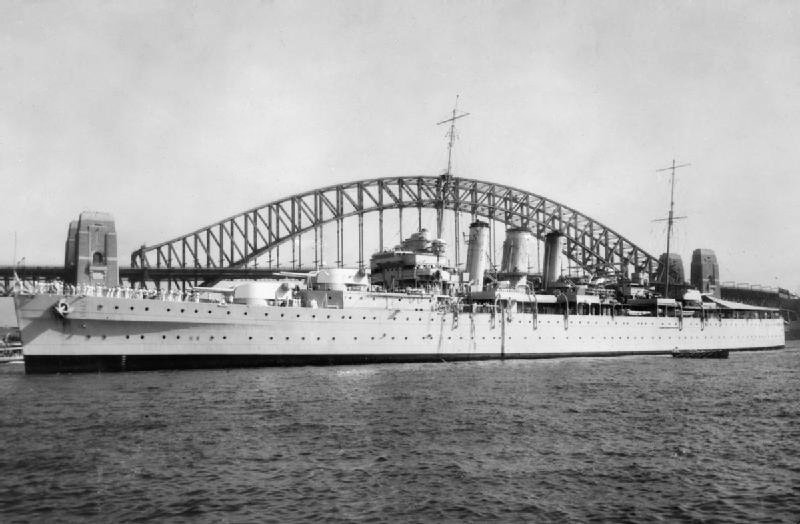
One particular story of bravery is well worthy of note. A Bismarck crew member, whose arms had been blown off, somehow managed to reach Dorsetshire and tried to grab a line in his teeth. On Dorsetshire, Midshipman Joe Brooks climbed over the side in an attempt to get a bowline around him. But the ship began to move forward and Brooks lost him, only barely managing to climb back on board himself. The Captain on Dorsetshire, Benjamin Martin, promptly put Brooks under arrest for leaving the ship without permission and had him confined to his cabin.

In an interesting postscript, Captain Martin was relieved of his command when HMS Dorsetshire arrived in Newcastle to disembark her Bismarck survivors. HMS Dorsetshire would go on to be sunk, a year and a month later, after being bombed by the Japanese in waters south west of Ceylon. More than 500 of HMS Dorsetshire's ship's company survived in the water, to be rescued by American ships the following day.