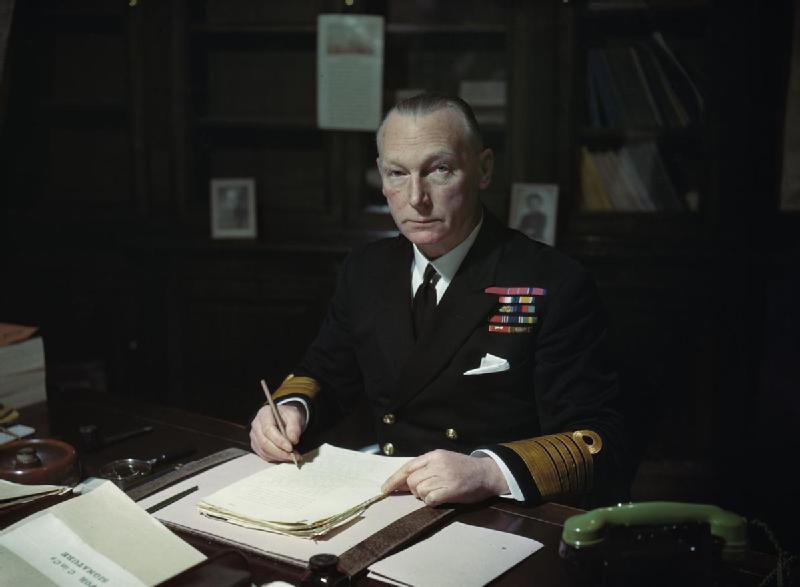
These three men are central to our story. 69 years ago, two of them had only days to live and with them, 4000 officers, men and boys would be lost in one of the greatest Battleship engagements of naval history. The fate of these men would materially effect the future of Battleships, for decades the capitol ship of all navies everywhere. It was, and still is, about power. Being able to project naval power. You could protect with a lesser ship, but in order to project, a Battleship was called for. But not for much longer.
Naval warfare was to change forever. Admiral of the Fleet Sir John Cronyn Tovey, 1st Baron Tovey, GCB, KBE, DSO, DCL
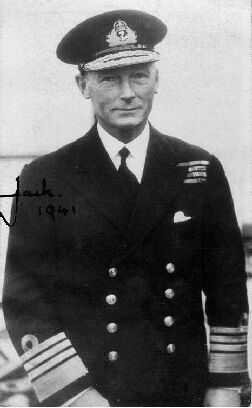
Admiral Sir 'Jack' Tovey, Here is another of Jack Tovey, wearing the lace of a full Admiral, RN, when Commander in Chief Home Fleet (CINCHOME), and flying his flag in HMS King George V during the hunt for Bismarck.
In the 1960 film, Sink the Bismarck!, Lütjens is portrayed as egotistic, overconfident, and a Nazi enthusiast angered over Germany's humiliation and his own lack of recognition at the end of World War I. In reality, Lütjens, the grandson of a jew, was pessimistic of the chance of success of Bismarck's mission and did not agree with Nazi policies; he was one of the few officers who refused to give the Nazi salute when Hitler visited Bismarck before its first and final mission, deliberately using instead the traditional naval salute. Lütjens also wore by choice the dirk of the Kaiserliche Marine, rather than the more modern Kriegsmarine dirk which bore a swastika. The film also makes a mistake in the sequence of events aboard Bismarck, showing Lütjens ordering Captain Ernst Lindemann to open fire on Hood and Prince of Wales. In the event, Lütjens actually ordered Lindemann to avoid engaging Hood, but Lindemann disobeyed and ordered the ship's gun crews to open fire on Hood and Prince of Wales.
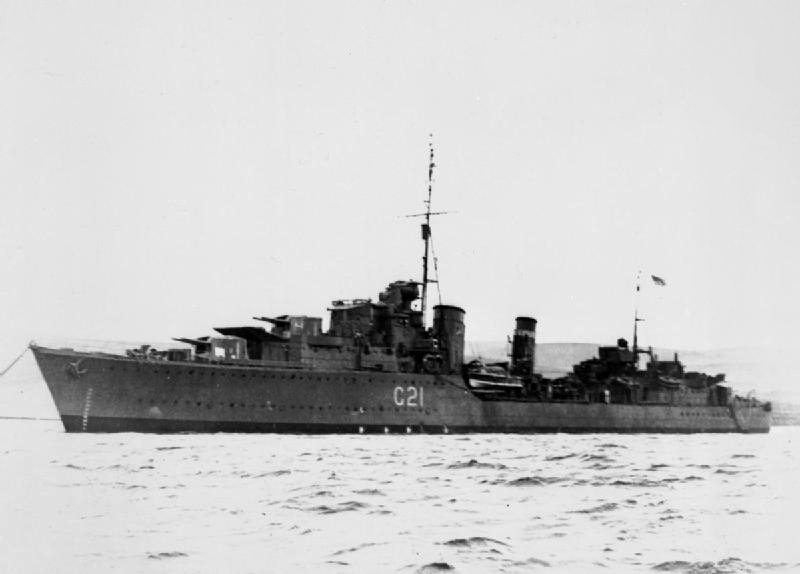
HMS Punjabi was a Tribal Class destroyer of the Royal Navy that saw service in the Second World War, being sunk in a collision with the battleship HMS King George V. She has been the only ship of the Royal Navy to bear the name Punjabi which in common with the other ships of the Tribal class, was named after an ethnic group of the British Empire. In this case, these were the Punjabi people, the inhabitants of the Punjab region between India and Pakistan.
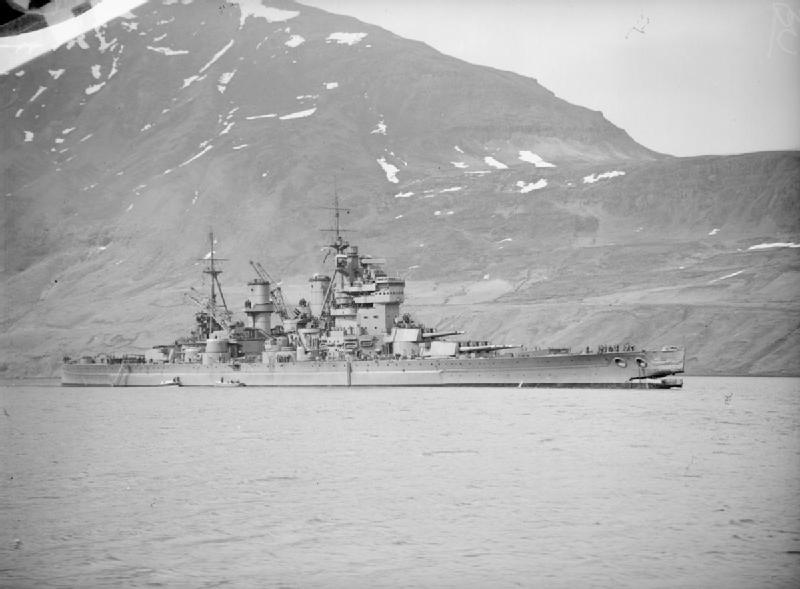
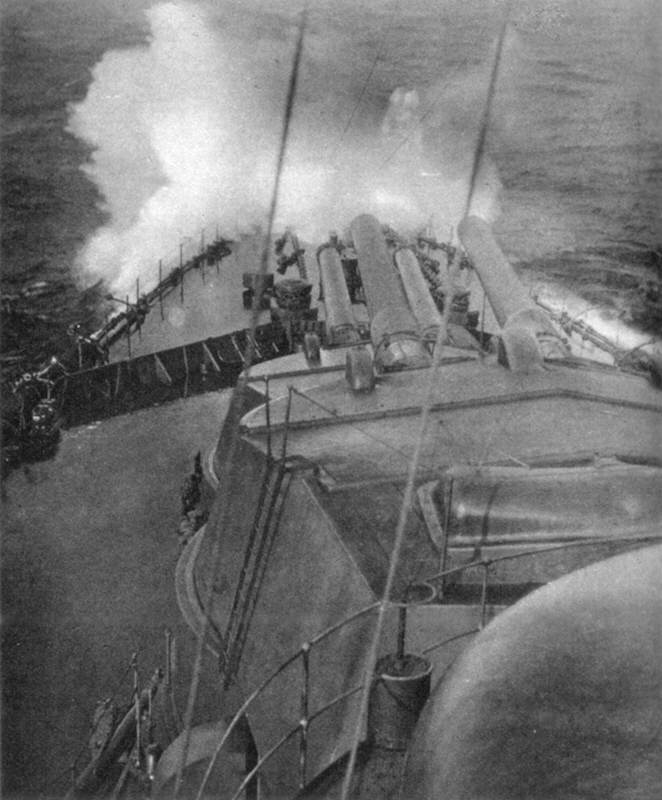
A picture of the mighty battleship HMS King George the 5th. Note the massive damage to her bows after slicing HMS Punjabi in half.
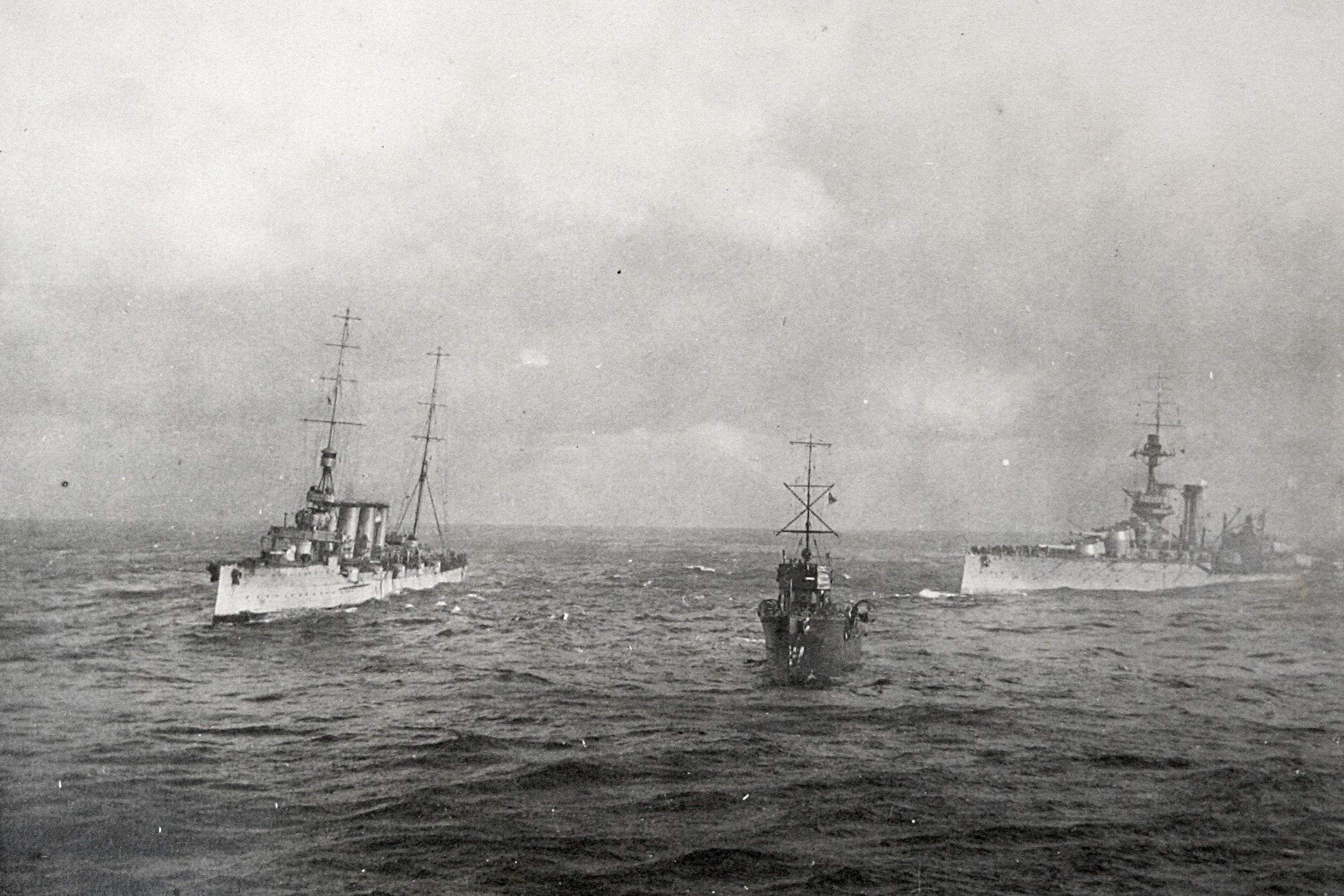
Punjabi was deployed on 26 April as part of the screen providing distant cover for the passage of Convoy PQ-15. They sailed from Hvalfjörður on 29 April. On 1 May she was rammed and sunk in a collision with HMS King George V in foggy conditions. Punjabi was sliced in two by the battleship's bow. 169 of the ship’s company were rescued from the forward section, and another 40 were picked up from the sea by other escorts, including HMS Marne. Those crew left in the after section, which sank very quickly, were killed when her depth charges were detonated. 49 of her crew lost their lives in the accident.
She sank directly in the path of the US battleship USS Washington, which had to sail between the halves of the sinking destroyer. Washington suffered slight damage from the detonation of the depth charges. HMS King George V had sustained serious damage to her bows and was forced to return to port for repairs.
HMS Audacious was a King George V-class battleship of the Royal Navy. The vessel did not survive its first conflict, being sunk by a naval mine off the northern coast of Donegal in Ireland in 1914.
At the beginning of World War I Audacious was part of the Second Battle Squadron of the British Grand Fleet. On 27 October 1914 the Second Battle Squadron, consisting of the 'super-dreadnoughts' HMS King George V, HMS Ajax, HMS Centurion, Audacious, HMS Monarch, HMS Thunderer and HMS Orion, left Lough Swilly to conduct gunnery exercises at Loch na Keal.
In a middle of a turn at 08:05 Audacious ran upon a mine laid by the German auxiliary mine-layer Berlin. The port engine room was flooded immediately, and Audacious began to list heavily and settle by the stern. Captain Cecil F. Dampier, thinking that the ship had been attacked by a submarine, hoisted the submarine warning and the rest of the squadorn steamed away from possible danger. Audacious, though unmanageable, was still capable of making 9 knots (17 km/h) on her starboard engine. Dampier believed that he had a chance of making the 25 miles (40 km) to land and beach the ship.
The light cruiser Liverpool stood by, while Audacious broadcast distress signals by wireless. The Commander-in-Chief of the Grand Fleet, Sir John Jellicoe ordered every available destroyer and tug out to assist, but did not dare send out battleships to tow Audacious in because of the apparent submarine threat. Meanwhile the White Star liner Olympic arrived on the scene.
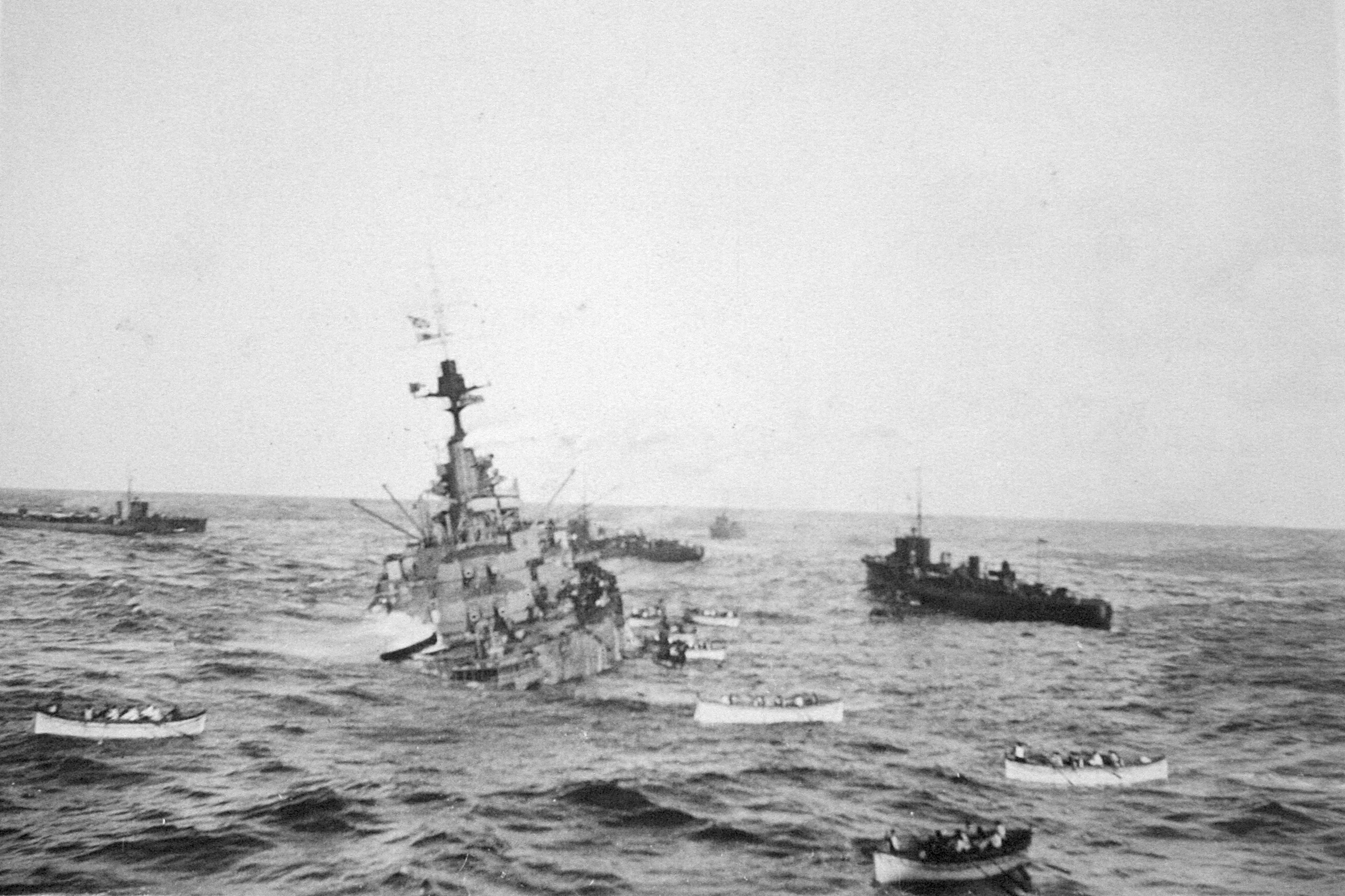
At 10:50, with flooding worsening in the starboard engine room, Audacious stopped. Dampier brought the head of the ship round to sea and ordered all non-essential crew off. Boats from Liverpool and Olympic assisted until all but 250 men were taken off. At 13:30 the captain of Olympic, Commodore Haddock, suggested that his ship attempt to take Audacious in tow. Dampier agreed and with the assistance of the destroyer Fury a tow line was passed within half an hour. The ships began moving toward Lough Swilly, but Audacious was so unmanageable that the tow line parted. Liverpool and the collier Thornhill attempted to take the battleship in tow, but to no avail. In the mean time, at 13:08 a message had arrived from the coastguard station at Mulroy that the steamer Manchester Commerce had been mined in the same area the day before.
At 16:60 Malin Head reported that the sailing vessel Cardiff had also been mined the previous night. Upon learning this, at 17:00 Jellicoe ordered the pre-dreadnought battleship Exmouth out to attempt to tow Audacious in. In case the ship was saved he also requested an officer from the Construction Department at the Admiralty in anticipation of major repairs.
Vice-Admiral Sir Lewis Bayly, commander of the First Battle Squadron, arrived on the scene in the boarding vessel Cambria and took over the rescue operation. With dark approaching, Bayly, Dampier and the remaining men on Audacious were taken off at 19:15. At 21:00 Audacious capsized and exploded, sending débris into the air. A piece of armour plate fell on and killed a petty officer on Liverpool, which was 800 yards (730 m) distant. This was the only casualty in connection with the sinking.
Jellicoe immediately proposed that the sinking be kept a secret, which the Board of Admiralty and the British Cabinet agreed to, an act open to ridicule later on. For the rest of the war Audacious' name remained on all public lists of ship movements and activities. Many Americans on board Olympic were beyond British jurisdiction and discussed the sinking. Many photos had been taken and even one moving film. By 19 November the loss of the ship was accepted in Germany. Jellicoe's opposing number in Germany, Reinhard Scheer, wrote after the war: "In the case of the Audacious we can but approve the English attitude of not revealing a weakness to the enemy, because accurate information about the other side's strength has a decisive effect on the decisions taken.