In May of 2008, I authored a post entitled "
HMS Dorsetshire and the ignominy of Benjamin Martin". By clicking the underlined titled of that post you will be taken to what I wrote then.
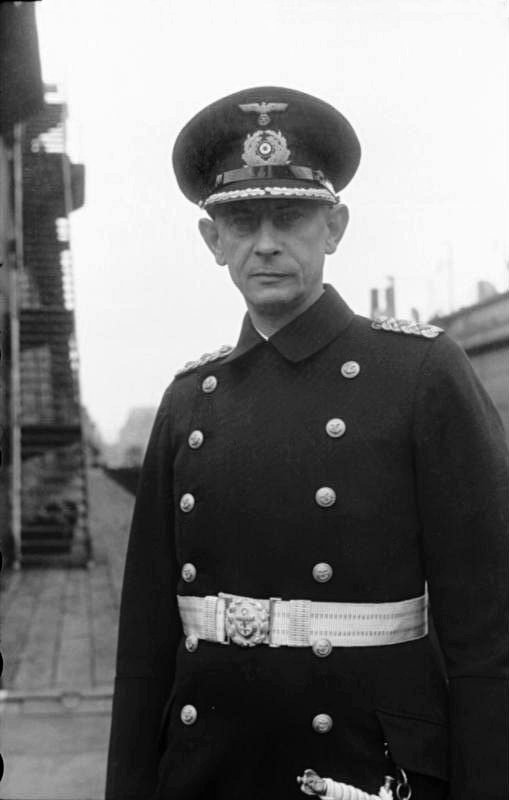
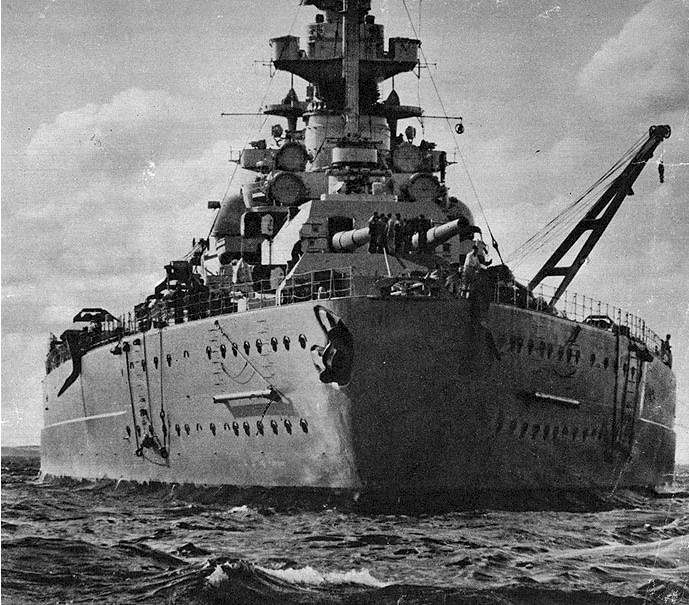
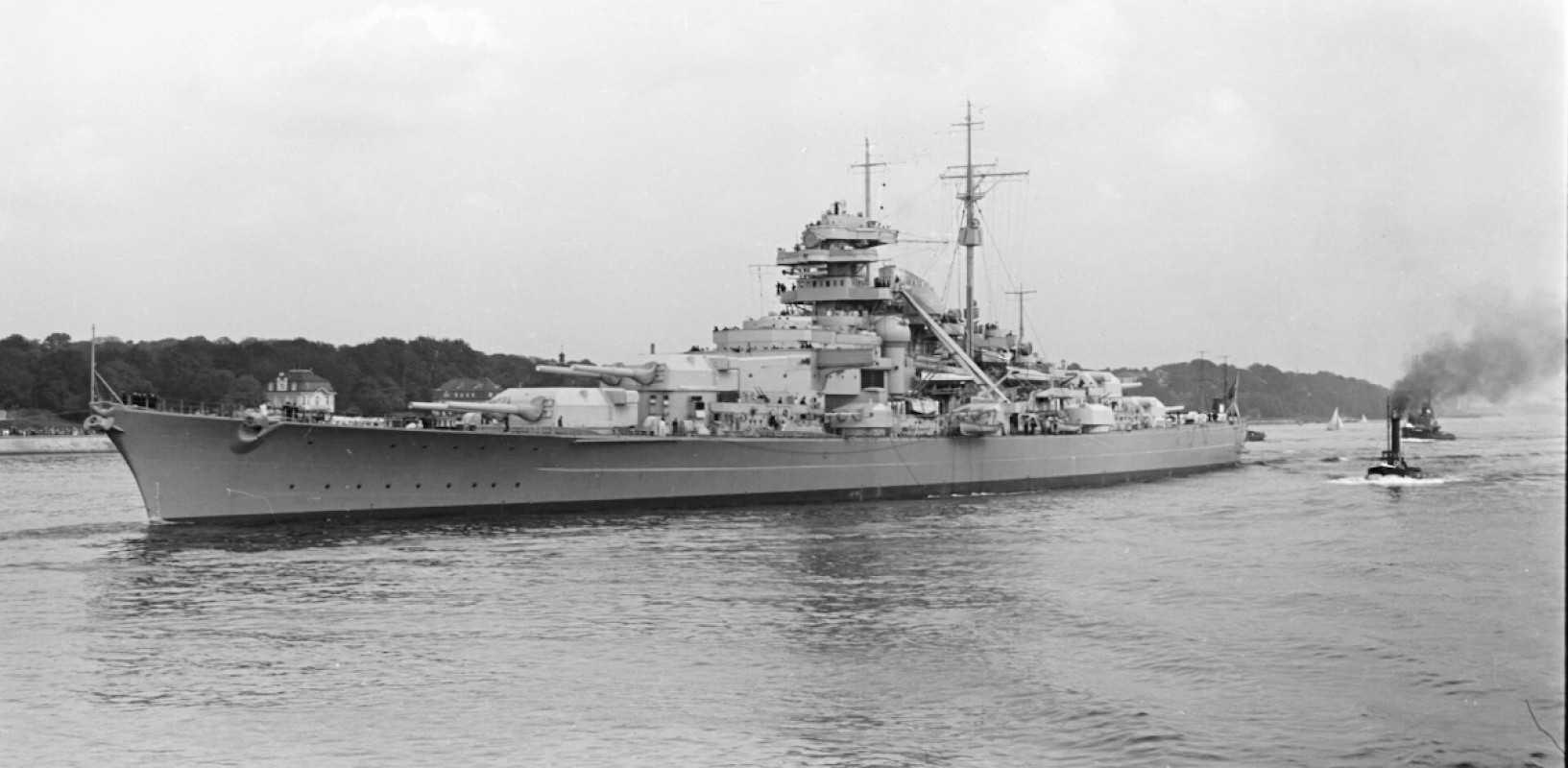
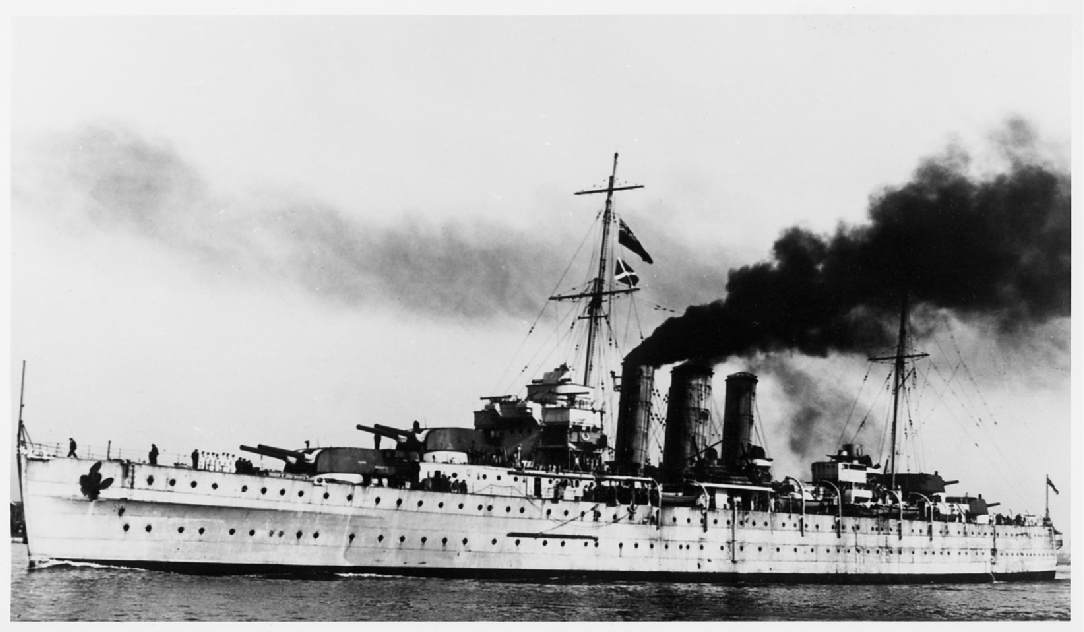
In that post, I postulated the view that Captain Martin conducted himself in a less than honourable way in leaving so many survivors of the Bismarck to their fate in the Atlantic on that afternoon in late May, 1941. I offered in support of this theory the fact that Captain Martin was relieved of his command upon HMS Dorsetshire's arrival in Newcastle following the dispersal of the fleet returning from battle.
I further offered the colloquial information gathered about Midshipman Joe Brooks and his brutal treatment for attempting to assist Bismarck survivors. Finally, I suggested that Captain Martin's command style was brutal, even cruel on occasion, and suggested his command style was contributory to suicides by crew members in Dorsetshire during her convoy duties that preceded her joining the battle to sink the Bismarck.
That post, more than any other, has generated a polarised discussion in the comments section. It is reproduced for you at the end of this post. Let me conclude, for now, with my words from the end of the most recent comment. I'm hoping they will solicit a return visit here, one month from now.
One month from tomorrow, May 27th, 2010, marks the 69th anniversary of the sinking of the KMS Bismarck by an attack force of His Majesty’s Royal Navy. On that day, I shall publish a post here on my blog that lays bare the entire truth as I have learned it to be.
I am now certain that many of my previously held beliefs are wrong. I will explain myself more fully on May 27th, 2010 here with a brand new post on the subject.
Thank you all, so very kindly, for your continuing interest and for visiting "Nineteen Keys and the Lure of a Furious Sea". It will be an honour, and indeed my duty, to present for you all, my findings in a month and a day from today.
Best wishes until then.
Every Sailor
Anonymous said...
My father was an officer on the Dorsetshire and present when Martin announced he was going after the Bismarck. According to my father, Martin had received no order to go after Bismarck and therefore abandoned his convoy. That is the reason for him being relieved of his functions afterwards.
21 September 2008 17:53
Every Sailor said...
Hello Anonymous, and thank you very much indeed for your comment. I'm afraid, with every respect, that your Father is mistaken. Admiral Sir John Tovey flew his flag in HMS King George V, which was the flagship involved in the pursuit of Bismarck following the Battle of the Denmark Strait which culminated in the tragic loss of HMS Hood. After it was clear Bismarck was done for, Admiral Tovey ordered HMS Dorsetshire, under the command of Captain Benjamin Martin, Royal Navy, to finish her off with torpedoes. This done, his further orders were to recover Bismarck survivors. KGV was very low on fuel and needed to recover to Scapa Flow and left Dorsetshire on scene to carry out these orders. However, Captain Martin used the pretext of U-boats in the area to leave hundreds and hundreds of fellow sailors in the Altantic to die, no doubt informed by the still recent memory of the loss of HMS Hood. His disgraceful actions resulted in him losing his command on arrival in Newcastle days later, and not for the reasons your Father suggests. With best regards, and thanks again for your visit.
21 September 2008 18:13
Anonymous said...
I think we are both right. Dorsetshire was never ordered to leave her convoy and went off to the scene to join the fight without permission. She was then ordered to finish Bismarck off. My father was present when Martin made the decision to abandon his convoy. That is historical fact. I don't think he was relieved of his functions for leaving the survivors in the water, that must be pure speculation, unless you have documented proof.
I'm fascinated by the character of Joe Brooks. Have you got anything on him? It was my father who took him the news that he was accused of leaving the ship without permission. He just said, "Jesus". I know he left the Dorsetshire before she was sunk.
I don't want to sign up on Google. My name is Martin. I live just across the Rhine from you in Alsace.
2 October 2008 14:43
Anonymous said...
Thanks for removing the comment. I'm not condoning Martin's actions. He was a hothead and probably a lot more... All reports I have read back up the story of a submarine alert and he was only following procedure. He may well have been looking for a way to curtail his rescue mission. There was a U-Boot (U27?)somewhere near, but it had no more torpedoes. To give Martin credit, he gave the Bismarck sailors who died on Dorsetshire a full military funeral and allowed fellow sailors to make the Hitler salute.
We cannot place ourselves in the context of war. The Doresthire survivors were machine gunned in the water by the very Japanese planes that had sunk the ship. That is also against all the rules of war. It's too easy to condemn people retrospectively. You can even excuse Martin for abandoning his convoy to go and get a bit of action, the number of suicides on Dorsetshire during convoy patrol indicating the desperation caused by the boredom of nothing happening and the constant fear that a torpedo would send you to the bottom in a few minutes.
Let not our fascination for the War blind us into glorifying it.
12 October 2008 16:02
Every Sailor said...
Hello Martin, thanks again for your visits. I haven't removed any comment from this entry and don't know to what you refer. In the time since last writing I was waiting for academic friends to get back to me to confirm my understanding of Captain Martin's motivation and the real reasons for his removal from the command of HMS Dorsetshire, but to date I have no further information, nor do I have any further details of the career of Mid Brooks, although he was received as guest of honour at many Bismarck survivor reunions until well into the 70's. With respect, I think you're wide of the mark in accusing this site of glorifying war. I take the view that war is the apotheosis of vulgarity, hardly glorious, merely an often revisited reminder of our history as savages. My interest here is in ships, and the men who go down to the sea in them. All the very best, Martin, and thanks again for visiting.
12 October 2008 23:27
Anonymous said...
Sorry if I went a bit overboard (sorry about the pun) on my last comment about glorifying the war.
And I could have sworn there was a comment about Martin losing his command for leaving the Bismarck survivors in the water. My mistake. I was not accusing your site of doing anything of the sort. There is just a danger of getting out of touch with the reality. Lots of Brits are fascinated by the War. They tend to get disconnected from the horrors of war.
I'm waiting with baited breath for the information about Martin from your historian friends. I'm also sure Martin used the sub alert to get his revenge on the Bismarck sailors. But is there any historical proof? My father had a few brushes with him. Once my father's Walrus (he was the "observer" (navigator))was left in the middle of the ocean by Martin who suddenly decided to go and look at something. Luckily my father's training taught them to do square searches and he eventually found the ship. My father nearly got into deep trouble when he went at Martin for leaving the agreed position for pick-up.
You can look at my site. Sorry, there's nothing about Dorsetshire.
www.mollkirch.com
Greetings, Martin
13 October 2008 11:29
Anonymous said...
I am reading Robert Ballard's book about the Bismarck and just got through with the section about Martin's decision to leave the German survivors scraping at the sides of the Dorsetshire as it sailed away. Surely he didn't believe a German submarine would launch a torpedo at a ship rescuing it's own countrymen. I believe Martin should go to hell for leaving those men to die.
10 November 2008 06:05
Every Sailor said...
Hello anonymous, and thank you for your comment. I agree with you that Captain Martin's decision to leave all those hundreds of Bismarck survivors in the water is difficult to fathom. The impression I have formed of him is that he was, to put it mildly, a difficult man. It should be remembered that the sinking of HMS Hood only days earlier would have been fresh in his mind, though, and so perhaps he abandoned these men to the Atlantic as an act of revenge. No U-Boat ever fired upon a ship recovering survivors. What is certain, though, is that he was relieved of his command upon arrival at Newcastle days later. It is interesting to imagine what was going through the collective mind of HMS Dorsetshire's ship's company when she herself was sunk by the Japanese the following year, with hundreds of sailors spending the night in the water before being rescued!
10 November 2008 13:16
Anonymous said...
My last comment doesn't seem to have appeared on your site. Are you running out of space? I found this link which mentions the presence of U74 during the sinking of the Bismarck. So there was a U-Boot in the area.
http://www.uboat.net/articles/index.html?article=25
Greetings, Martin
10 January 2009 13:13
Anonymous said...
It's my again, Martin.
This video talks about Dorsetshire leaving its convoy "on its own initiative", in other words "abandoning it".
http://www.youtube.com/watch?v=WubneHZBeic&NR=1
Most likely the reason for Martin's loss of command.
11 January 2009 19:54
Every Sailor said...
Hi Martin, this is your characterization, unsupported by the evidence. Leaving convoy duty in support of a larger action is within the purview of any warship captain in time of war unless he has explicit orders to the contrary. Your use of the words "abandoning it" are emotive, and using them to support what amounts to nothing more than your opinion is not valid. Your long post of some time ago was deleted because it rehashed your points of view made clearly in earlier entries. You're entitled to your opinions, Martin, but I reserve the right to remove them from my blog when, in my view, they offer nothing in pursuit of the truth. Once again, I put it to you that Captain Martin of HMS Dorsetshire was relieved of his command on arrival in Newcastle due, in part, to his dereliction of duty in abandoning (to borrow your word) Bismarck survivors to drown in the north Atlantic, when given explicit orders by Admiral Tovey embarked in HMS King George V to pick them up. If you have evidence to the contrary, I'd be glad to have it.
11 January 2009 20:51
Anonymous said...
Hello Every Sailor and Martin.
I have come across this sit by pure accident and find it quit disturbing. I am the great grandchild of Benjamin Martin, and a serving member of the Royal Navy. I Find this blog very one sided on behalf of yourself Every Sailor and find you do not seem to give credit to Martins opinion.
I am sure there is some form of evidence that reflects both your arguments and mine, though it will be one of those things that will never come to light but just think of these true facts that still ring true to this very day. Leaving your patrol (Convoy) is an act of “abandoning” and is an act that is punishable. At war the ship is first and life is second. Ask yourself this, if you were in the situation my great granddad found himself in, sitting in the water like a sitting duck with a possible U –Boat in the area. Would you not remove yourself to save your ship and the ships company? Or would you stay and risk your men and the fellow men they saved.
Every Sailor you say “No U-Boat ever fired upon a ship recovering survivors” but no one ever sank the Germans pride battle ship the Bismarck. War is a very unpredictable thing. I believe you should watch the link Martin put on your blog as this is view from both sides.
I also find you have not spoken about how the men were treated when they found themselves aboard HMS Dorsetshire. If he was such a heartless man would he have treated the Bismarck’s Crew with as much respect as he did. Please look into the faces about this, as this will show his true character and not a Captain of a ship doing the best for his ships company in the height of war.
Sailors were lost on both side, these men should be remembered. As should the crew of HMS Hood of witch 3 survived of 1418 crew members, of witch the Bismarck did not pick up one.
With Regards
Serving Sailor
8 February 2009 17:50
bob said...
dear sirs
i have read this feed with much interest. the differing opinions are fascinating to say the least.
the comment "Sailors were lost on both side, these men should be remembered. As should the crew of HMS Hood of witch 3 survived of 1418 crew members, of witch the Bismarck did not pick up one." (sic) made by serving sailor ,for instance. the hood sank in 3 minutes after her magazines and stores of her own torpedo's exploded as a result of a hit by one or more shells from the bismarck. . there basically were'nt any survivors to pick up!
as for capt. martin ( there isnt even agrrement as to his first name..benjamin in some articles,john on the history channel program shown on the you tube feed) and his leaving those men in the water....no matter what nationality or political beliefs you may have, it was indeed disgraceful.
there can be no doubt he was relieved of command so as not to be in a position of further embarrassment the royal navy .
with regards,
22 March 2009 08:18
Anonymous said...
Hello Every Sailor
I am the grand daughter of Benjamin C.S. Martin.
With respect to all stories being bantered about, a lot of of the comments made are not true to fact.
My grandfather did not lose his command of Dorsetshire at Tyneside.
Dorsetshire berthed at Tyneside on 30th May 1941. Dorsetshire was handed over to Captain Agar on 8th August 1941 at Scapa Flow. (Captain Martin having spent 2 years as Captain of the Dorsetshire at sea)
Thankyou Bob for your comments, but Captain Martin then went on to become Commadore at the Naval base in Durban South Africa. He was awarded the DSO in Oct 1941, CBE in Jan 1944 KBE in Jun 1946, He was the Admiral in charge of the landing Force in Rangoon in the Burma Campaign. Tell me where in these honours and further commands does it relate that he was a discrace to the Royal Navy. My father received a letter from a Bismarck survivor many years later,having nothing but praise for my grandfther and the way they were treated on board Dorsetshire upon their rescue.
I belong to H.M.S.Dorsetshire Association where a lot of the remaining survivors of the Dorsetshire's sinking still meet up every Easter to remember those they lost in 1942. One was his messenger boy and another his steward who also went on with him to South Africa.
I have read a lot of the memoirs that these wonderful gentlemen have written. They say my grandfather was a hard task master and didn't stand for any nonsence, but they say he was a fair Captain and had nothing but respect for him, they believe that had he still been their Captain in 1942, they probably wouldn't have been sunk by the Japanese as sailing into the sun was the worst senario. They went through hell when they lost their ship and still they were fired upon by the Japanese in the water.
By all accounts Dorsetshire saved as many as she safely could and Brooks' comments are probably a touch of 'sour grapes' because he had been reprimanded. War is a terrible and has many casualties, decisions have to be made that are not liked by all, but have to be made all the same for the safety of your crew. U boat or no U boat, if there had been one, what would the argument have been, Dorsetshire could have been crippled or even lost then and many more lives could have been lost and the brave and often forgotten men of this conflict wouldn't be alive today to tell the tale.
9 April 2010 03:28
Every Sailor said...
Dear Lady,
Thank you very much indeed for your kind visit and for your words in memory of a beloved Grandfather, Captain Martin of HMS Dorsetshire. I am deeply moved by what you have written and will respond appropriately in due course.
With sincere, best regards,
Every Sailor.
9 April 2010 06:44
Anonymous said...
The reason for his relief notwithstanding, Captain Martin got what he deserved. Frankly, I would not have promoted that man. As I recall, A midshipman on the Dorsetshire attempted to rescue a Bismarck crewman who lost his arms and was literally hanging onto the rope on the side of the ship with his teeth. The midshipman was placed under arrest by Martin and confined to his cabin, while the German sailor the midshipman bravely attempted to rescued fell into the Atlantic and perished with over 1,000 of his shipmates. Yes, that speaks volumes about Martin. And WITH ALL DUE RESPECT, none of you good people out there are going to change my perception of that man. I would have had him thrown out of the Navy or assigned to a bloody supply depot in a remote area of what was then known as the British Empire and kept him there until he had to retire for serving the maximum amount of time on active duty as a Captain.
25 April 2010 18:38
Richard said...
I respectfully disagree with Martin's Granddaughter. With all due respect to the lady, she can be perceived as someone who is lacking objectivity in assessing what her Grandfather did. Martin's actions can be construed by some as a War Crime. I would not go that far, but on the other hand I hardly consider him an admirable sort. Also, I agree with the previous comment: Martin should have been passed over for promotion. Furthermore, Martin's arrest of a Midshipman who bravely tried to save a Bismarck Sailor who lost his arms was absolutely shameful and reprehensible. He should have been brought before a court of inquiry and reprimanded.
25 April 2010 18:48
Every Sailor said...
Thank you to you both, Anonymous and Richard for your kind visit to the site and for your comments.
Since posting about Captain Martin and his involvement in the sinking of Bismarck, I have gone to great lengths in researching the truth. After such a long time, though, it is inevitable that the truth fades and is replaced, in varying degrees, by legend and myth. So it is with the Bismarck.
Searching the service records of Her Majesty's Public Records Office in Kew is a long and thankless task, but I was determined to learn the truth, no matter what that may be.
As a German, I was keen, even after all this time, to prove that Captain Martin was a beast. I wanted to establish, above all, that his refusal to collect all those boys and young men, the survivors of the Bismarck's sinking, from the sea was an inhuman act. I wanted very much to prove that he used the pretext of a submarine sighting to abandon those boys to their Atlantic deaths as one man's vengeance for Bismarck's sinking of HMS HOOD in very recent days.
I wanted to prove that life in HMS Dorsetshire under his command was horrendously brutal and that Captain Martin drove men to suicide through frustration at his command style in a time of war. I wanted to establish that Benjamin Martin was a cruel man; one who willfully disobeyed orders to seek the aggrandisement that lay in the Bismarck engagement. I wanted to prove that he was relieved of his command on arrival at Newcastle-Upon-Tyne for dereliction of duty and for failing to carry out the orders of Admiral Tovey, that HMS Dorsetshire should rescue the Bismarck’s survivors.
I wanted all of this and more to be true. I wanted it very much.
HOWEVER.....
There is nothing more important to me than the actual truth. The truth of what happened and why. It has been my privilege in very recent days to have struck research gold in my quest for the truth of HMS Dorsetshire and the command of Captain Martin.
I must report to you now, that much of what I have learned has been personally explosive because it has compelled me to reassess long-held views and to re-examine that which, to my mind, was established as correct to a moral certainly.
However, in the interests of truth, and in order to more respectfully honour the memories of those no longer with us, on both sides of the war at sea, I am duty bound to faithfully report what I have learned about Captain Martin, HMS Dorsetshire, Midshipman Brooks and a lot more besides.
One month from tomorrow, May 27th, 2010, marks the 69th anniversary of the sinking of the KMS Bismarck by an attack force of His Majesty’s Royal Navy. On that day, I shall publish a post here on my blog that lays bare the entire truth as I have learned it to be.
I am now certain that many of my previously held beliefs are wrong. I will explain myself more fully on May 27th, 2010 here with a brand new post on the subject.
Thank you all, so very kindly, for your continuing interest and for visiting "Nineteen Keys and the Lure of a Furious Sea". It will be an honour, and indeed my duty, to present for you all, my findings in a month and a day from today.
Best wishes until then.
Every Sailor.
26 April 2010 15:30


 Click this link for an excellent article from the edition of LIFE Magazine, August 11, 1941.