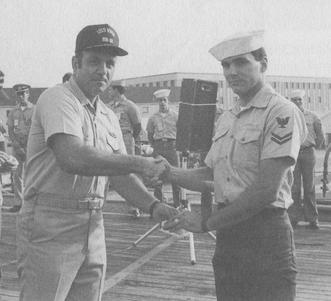
Captain Fred Moosally, USN presenting Seaman Clayton Hartwig with a Duty Award at Norfolk in the summer of 1988.
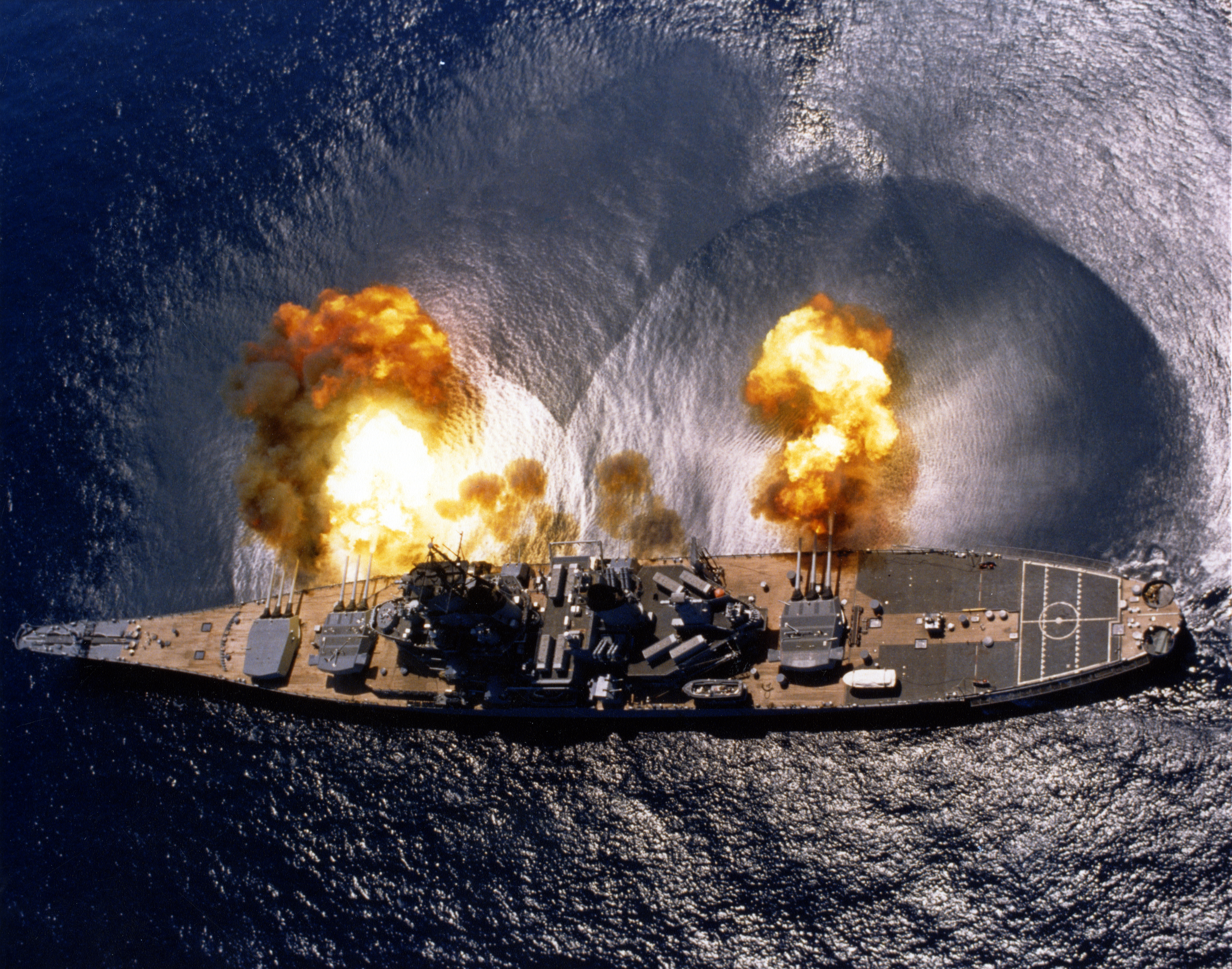
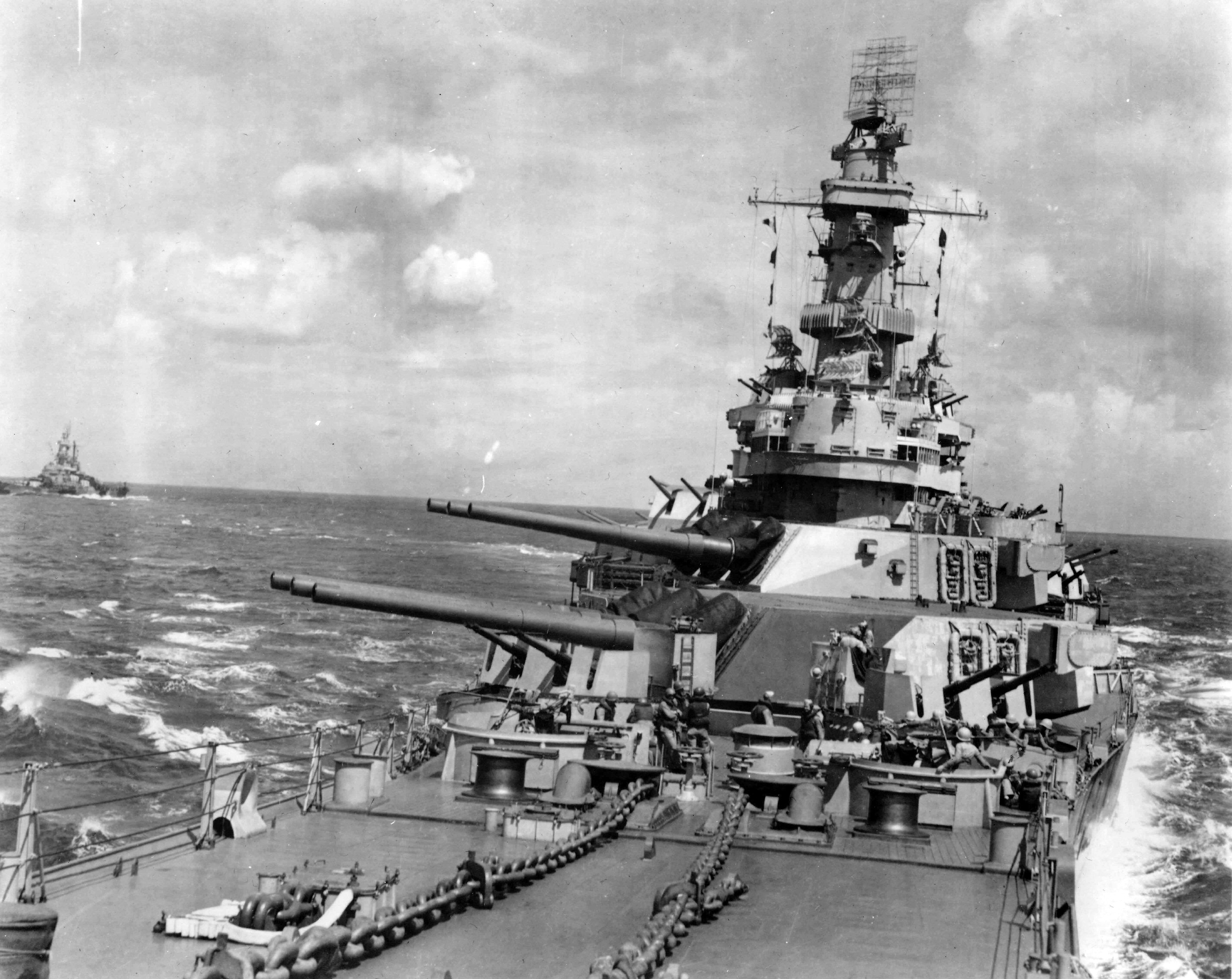
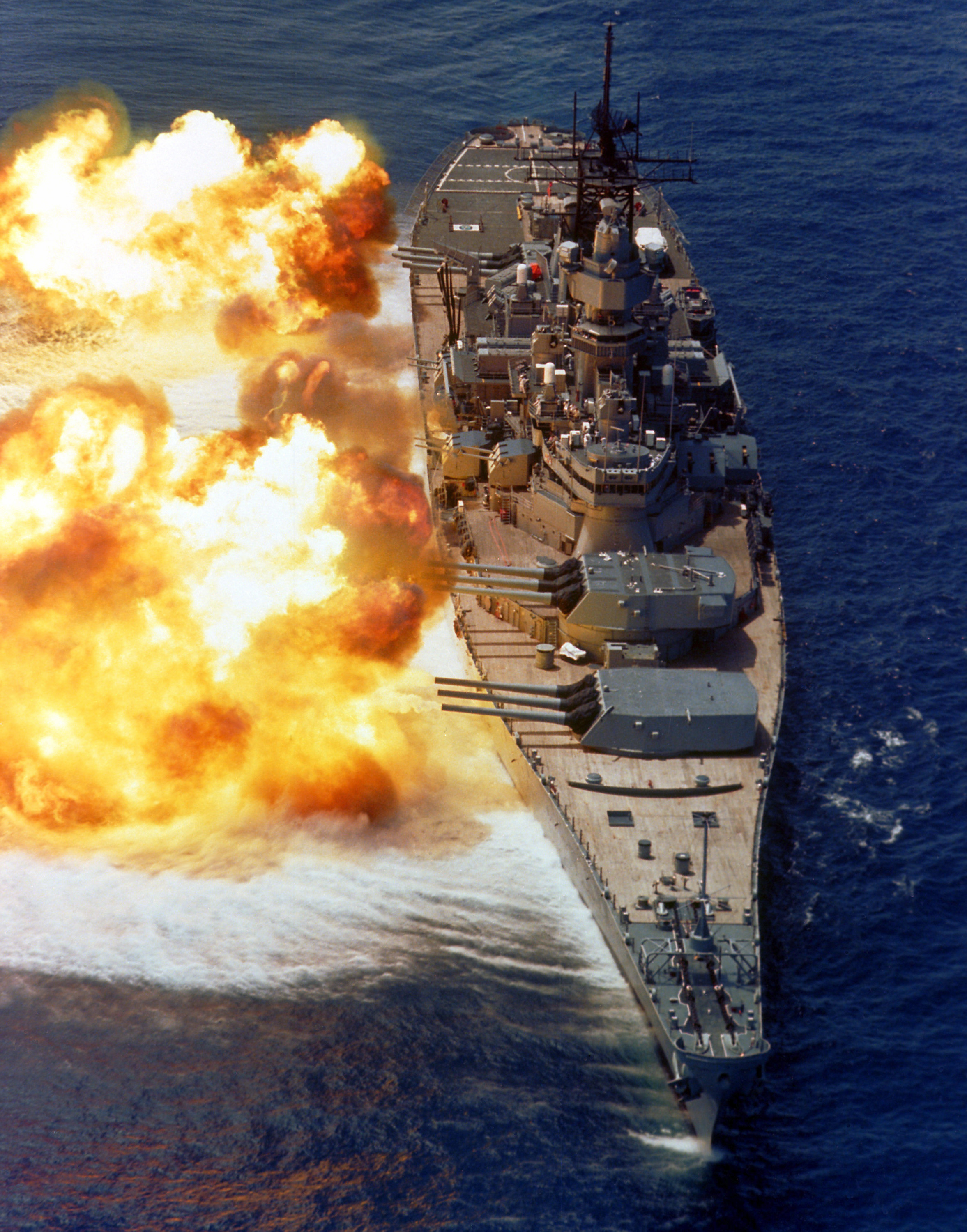
USS Iowa (BB-61) ("The Big Stick") was the lead ship of her class of battleship, and was the fourth ship of in the United States Navy to be named in honour of the 29th state. USS Iowa is the only ship of the class to have served a combat tour in the Atlantic Ocean during World War II.
During World War II, Iowa served in the Atlantic fleet as a countermeasure against the German battleship Tirpitz. When transferred to the Pacific fleet in 1944, Iowa shelled beachheads at Kwajalein and Eniwetok in advance of Allied amphibious landings and screened aircraft carriers operating in the Marshall Islands. During the Korean War, Iowa was involved in raids up and down the North Korean coast, after which she was decommissioned into the United States Navy reserve fleets, better known as the "mothball fleet". She was reactivated in 1984 as part of the 600-ship Navy plan, and operated in both the Atlantic and Pacific fleets to counter the recently expanded Soviet Navy.
In April 1989 an explosion of undetermined origin wrecked her #2 gun turret, killing 47 sailors.
Iowa was decommissioned for the last time in 1990, and was initially struck from the Naval Vessel Register in 1995; however, she was reinstated in 1999 to allow her sister ship New Jersey to be donated to her namesake state for use as a museum. Iowa is currently berthed with the National Defense Reserve Fleet at Suisun Bay, near San Francisco, California, and is awaiting donation to a not-for-profit entity for use as a museum ship.
At present, Iowa is the only member of her class not open to the public.


At 9:55 AM on 19 April 1989, an explosion ripped through the Number Two 16 inch gun turret, killing 47 crewmen. A sailor in the powder magazine room quickly flooded it, thereby preventing catastrophic damage to the ship. At first, the NCIS investigators theorized that one of the dead crewman, Clayton Hartwig, had detonated an explosive device in a suicide attempt after the end of an alleged homosexual affair with another sailor.
To support this claim naval officials pointed to several different factors, including Hartwig's life insurance policy, which named Kendall Truitt as the sole beneficiary in the event of his death, the presence of certain unexplained materials inside Turret II, and his mental state, which was alleged to be unstable. Although the Navy was satisfied with the investigation and its results, others were unimpressed with the NCIS investigation, and in October 1991, amid increasing criticism over what was seen as a very poor investigation with little or no real forensic proof, Congress relented and forced the Navy to reopen the investigation.
This second investigation, handled by independent investigators, was hampered by the fact that most of original debris from Iowa had been cleaned up or otherwise disposed of by the Navy before and after the first investigation, but the investigation did manage to uncover evidence pointing to an accidental powder explosion rather than an intentional act of sabotage by sailors, homosexual or otherwise.
While Iowa was undergoing modernization, sister ship USS New Jersey (BB-62) had been dispatched to Lebanon to aid the peacekeeping forces by providing offshore fire support. Unfortunately, New Jersey was at the time the only commissioned battleship anywhere in the world, and in an effort to get another battleship commissioned to relieve New Jersey, the modernization of Iowa was stepped up, leaving her in poor condition when she recommissioned in 1984. In May 1988, Captain Fred Mosally, USN replaced Captain Larry Seaquist, USN as captain of the Iowa. Unlike Captain Seaquist, who had placed emphasis on the training and manning of guns, Captain Mosally was more concerned with the maintenance of the missiles on Iowa.
It transpires the Navy had improperly stored the gunpowder used aboard the battleship; it had been placed aboard a barge where sunlight and other elemental factors contributed to its degradation. Powder from the same lot as the one under investigation was tested at the Naval Surface Warfare Center Dahlgren Division. Spontaneous combustion was achieved with the powder, which had been originally milled in the 1930s and improperly stored in a barge at the Navy's Yorktown, Virginia Naval Weapons Station during a 1988 dry-docking of the Iowa.
Gun powder gives off ether gas as it degrades; the ether is highly flammable, and could be ignited by a spark. This revelation resulted in a shift in the Navy's position on the incident, and Admiral Frank Kelso, the Chief of Naval Operations at the time, publicly apologized to the Hartwig family, concluding that there was no real evidence to support the claim that he had intentionally killed the other sailors. The captain of the Iowa, Captain Fred Moosally, was severely criticized for his handling of the matter, and as a result of the incident the Navy changed the powder-handling procedures for its battleships.
The incident remains the surface Navy's worst loss of life during peace time operations, surpassing the loss of life incurred from the attack of an Iraqi Air Force jet on the Oliver Hazard Perry-class guided missile frigate USS Stark (FFG-31).


.jpg)