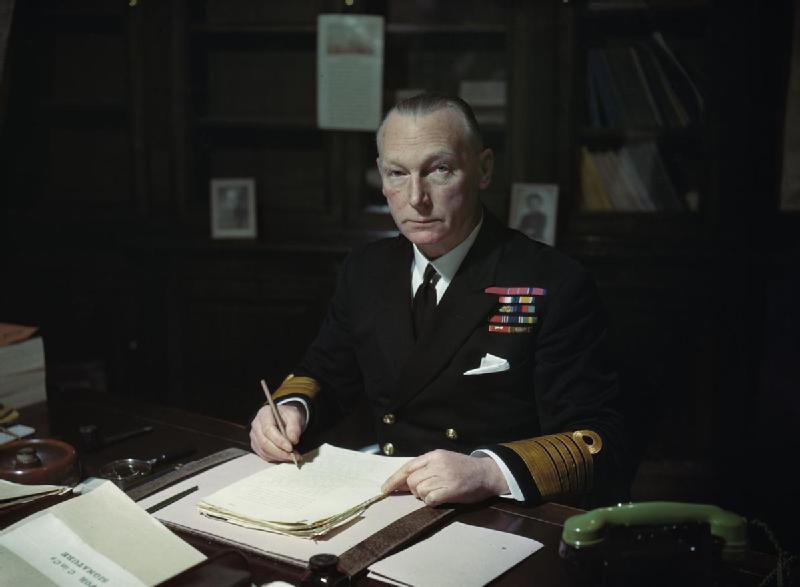
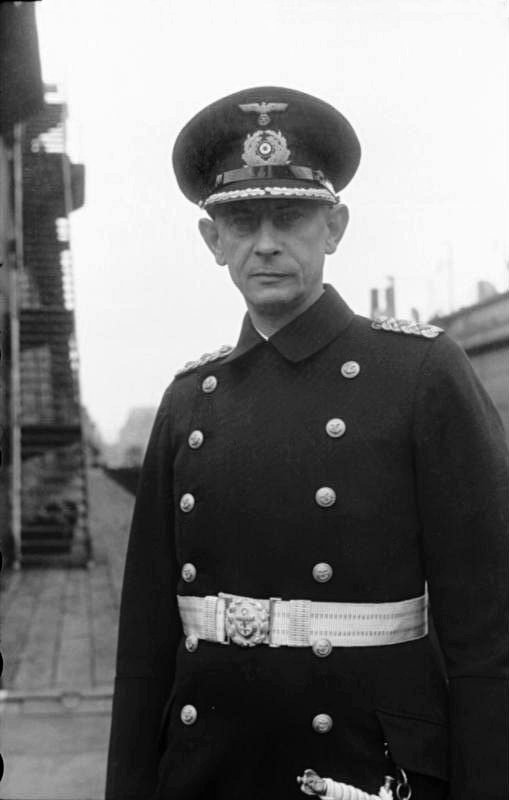
 Any discussion about the Bismarck should begin, and end, with this man. Captain Ernst Lindemann. From his early days as a young gunnery officer in the Battleships Elsass and Schleswig-Holstein during World War 1, Lindemann went on to be a lecturer at the Naval Gunnery School. From 1936 he was an advisor to, and later head of, the construction department of the Naval High Command. If you were to choose your very best man to command your very best ship, Kapitän zur See Ernst Lindemann was an ideal choice. Such key people were crucial in the war at sea during those dark days of the 1940's. From the German point of view, it was a case of so few against so many. The "many" they referred to was, of course, His Majesty's Royal Navy, then the greatest sea power ever known.
The strategy was as brilliant as it was simple.
Sink enemy merchant shipping, avoid enemy warships and on NO account, engage Battleships of the Royal Navy.
By 1941, three million tons of allied merchant ships had been sunk by German U-boats and the impact was very nearly catastrophic. Since Britain is an island, the best way to bring her to her knees, then as now, is to interdict her trade routes. If you sink the ships bringing provisions to Britain, you will very soon starve her. It was for this purpose that the greatest Battleships of the the Kriegsmarine were built.
None greater than this one. None greater than BISMARCK. In fact, so massive was Bismarck, Captain Lindemann decided his ship was to be known and referred to as, a 'he', rather than in the female as is customary when it came to ships. Not for Bismarck, though. Bismarck was a 'he'.
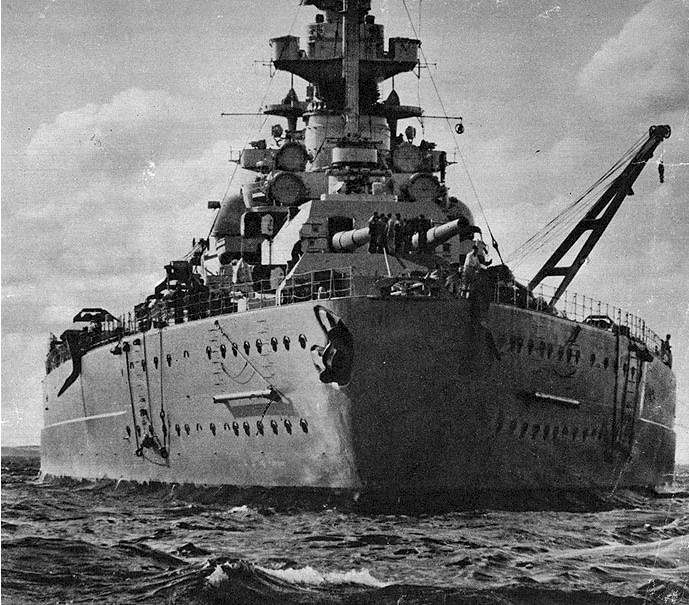

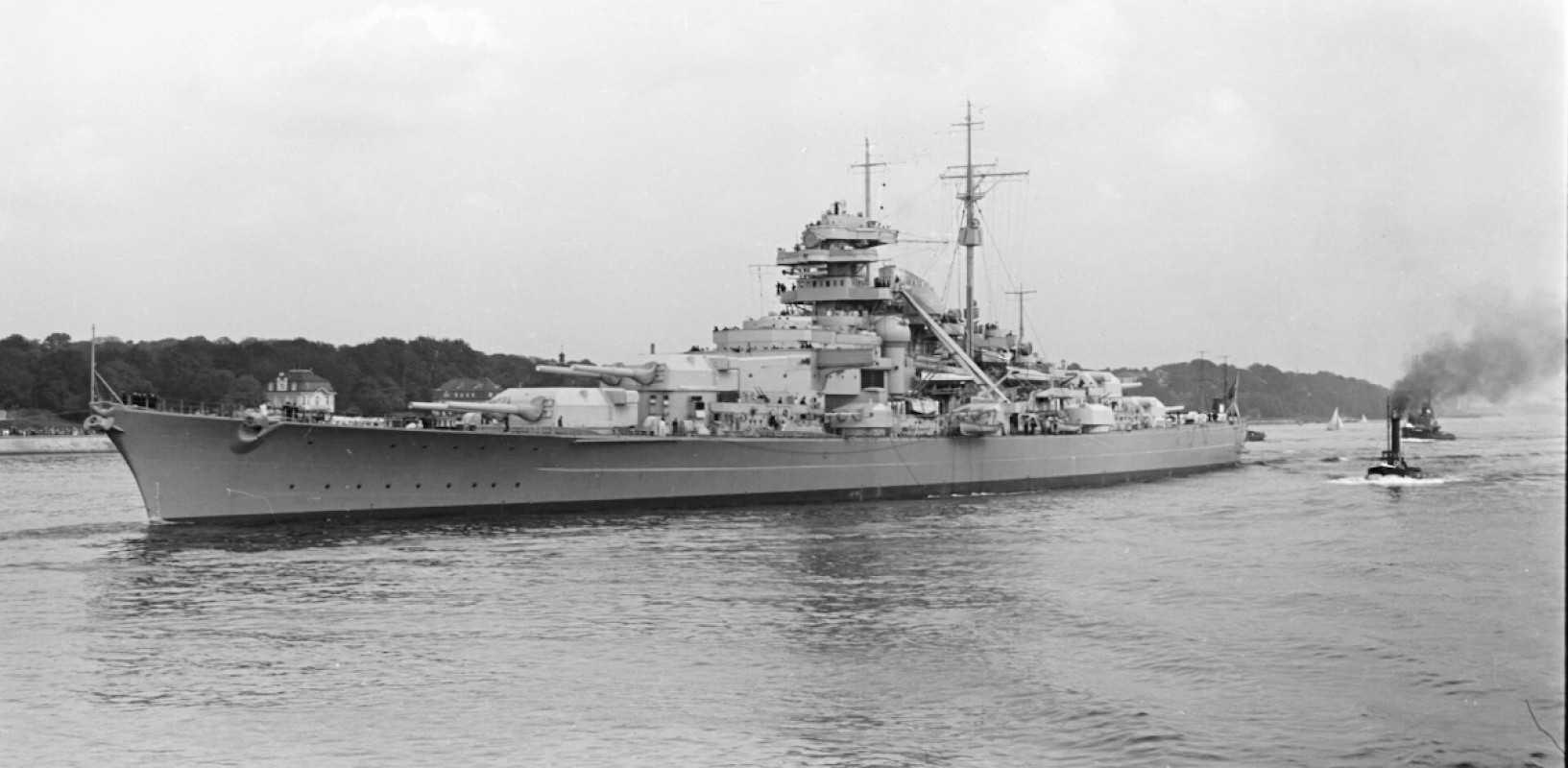
Three days earlier, Bismarck not only engaged battleships of the Royal Navy, but sunk the very pride of their fleet during the Battle of the Denmark Strait. This unleashed a force of fury and determination that would lead to sinking of Bismarck. But she very, VERY nearly got away with it.
 After sinking HMS Hood, Bismarck and Prince Eugen were relentlessly pursued by HMS Norfolk and Suffolk. In a brilliant tactic, the two German ships separated, causing the hounds to lose the scent, thus allowing their fox Bismarck to escape into the vastness of the Atlantic. It was only a long, rambling and completely unnecessary series of radio messages sent by Admiral Günther Lütjens that permitted the location of Bismarck to be triangulated by radio detection stations onshore in Britain.
HMS King George V was on her way at high speed though over 110 nautical miles away. HMS Rodney and Dorsetshire were to leave convoy duty for the hunt, and an attack force from Gibraltar, HMS Sheffield and the brand new carrier HMS Ark Royal was underway at high speed.
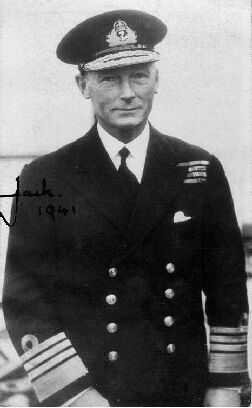
Flying his flag in HMS King George V, Admiral Jack Tovey ordered the aircraft from Ark Royal to find and attack Bismarck. She had to be slowed down somehow or they'd have no chance of catching her before she reached Brest and the safety of German air cover.

HMS Sheffield was between the Ark Royal and Bismarck and in their enthusiasm, the Swordfish torpedo bombers of HMS Ark Royal mistook HMS Sheffield for the Bismarck and launched a coordinated attack on their own ship! Fortunately for HMS Sheffield, a new type of contact detonator was being tried on the torpedoes and they were duds. No torpedo exploded and the Swordfish recovered to HMS Ark Royal for rearming with older, but effective detonators.
HMS Sheffield was between the Ark Royal and Bismarck and in their enthusiasm, the Swordfish torpedo bombers of HMS Ark Royal mistook HMS Sheffield for the Bismarck and launched a coordinated attack on their own ship! Fortunately for HMS Sheffield, a new type of contact detonator was being tried on the torpedoes and they were duds. No torpedo exploded and the Swordfish recovered to HMS Ark Royal for rearming with older, but effective detonators.
There was to be no mistake the second time and the subsequent attack disabled Bismarck's steering. It was only a matter of time now.
I think it useful to reflect upon the force gathered to hunt and sink the Bismarck. It required the collective efforts of a British fleet of five battleships, three battle cruisers, two aircraft carriers, four heavy and seven light cruisers, and twenty one destroyers to find an destroy her. In addition, more than fifty aircraft of the RAF's Coastal Command participated in her destruction. At ranges that diminished to 2,500 meters and brought a proportionalely high rate of hits, the following ordnance was fired at the Bismarck after the action off Iceland.
380 16 inch shells fired from HMS Rodney
716 6 inch shells fired from HMS Rodney
339 14 inch shells fired from from HMS KGV
660 5.25 inch shells fired from HMS KGV
527 8 inch shells fired from HMS Norfolk
254 8 inch shells fired from HMS Dorsetshire
In total, 2,876 shells fired at the Bismarck during a course of action that lasted ninety minutes.
Of the battle to sink the Bismarck, CINCHOME, Admiral Jack Tovey wrote:-
"The Bismarck had put up a most gallant fight against impossible odds, worthy of the old days of the Imperial German Navy, and she went down with her colours flying".
The admiral had wanted to say this publicly but the Admiralty informed him: "For political reasons it is essential that nothing of the nature of the sentiments expressed by you should be given publicity, however much we admire a gallant fight".
 A final word about Captain Lindemann. This brief extract from 'Battleship Bismarck, a survivors story' by Baron Burkard Von Müllenheim-Rechberg, the Bismarck's top-ranking survivor.
When swimmers close to the bow of the ship looked back, they saw Lindemann standing on the forecastle in front of turret Anton. His messenger, a seaman, was with him. Soon, both men went forward and began climbing a steadily increasing slope. Lindemann's gestures showed that he was urging his companion to go overboard and save himself. The man refused and stayed with his commanding officer until they reached the jackstaff. Then Lindemann walked out on the starboard side of the stem which, though rising ever higher, was becoming more level as the ship lay over. There he stopped and raised his hand to his white cap. The Bismarck now lay completely on her side. Then, slowly, slowly, she and the saluting Lindemann went down.
Later a machineist wrote,
"I always thought such things happened only in books, but I saw it with my own eyes."
The Battleship Bismarck, sunk on this day, May 27th, 1941. Sixty nine years ago today. She sank slowly by the stern and slipped beneath the waves at 1039 am. Of her ship's company of 2200, 1995 would die.